



Brandy doesn’t always get the spotlight it deserves. Whether you’re sipping it as a nightcap, mixing it into a classic cocktail or just curious about what sets it apart from whiskey, this brandy guide covers everything you need to know about this elegant, fruit-forward spirit — from how it’s made to the best bottles to try.
Save this for later!
DISCLAIMER
*This post may contain affiliate links, meaning Feast + West may receive commissions for purchases made through those links — at no cost to you. All opinions are our own. Please read our full disclosure for more information.
Your ultimate guide to brandy
Here’s something this cocktail blogger is a little afraid to admit: I avoided brandy for a looong time. The truth is it’s a complex spirit with many types and age ratings, and I wasn’t really sure how to shop for it, let alone enjoy it.
My grandfather used to enjoy a little brandy nightcap after dinner, and it always had a spot in his bar cabinet — if only he’d been around to teach me! But even so, I’m glad I took the time to get to know brandy and its intricacies.
Brandy is a spirit with old-world elegance that’s also surprisingly versatile. It is lovely in cocktails like the Brandy Alexander (one of my favorites). It has definitely earned a spot on my bar cart, too — and hopefully yours, too. Below, I have some shopping tips for you, plus a little about all the different types and specifications you can buy.
What is brandy?
Brandy is a distilled fruit wine aged in French oak barrels. Most commonly it is made from grapes, but can be made from apples, pears and other fruits.
It has deep European roots, particularly France, but it can be made anywhere in the world. The name comes from the Dutch word brandewijn, meaning “burnt wine.”
(It was truly tempting to start this section with “Brandy, you’re a fine girl,” but I refrained… and ended it this way instead.)

Brandy vs. other spirits
Brown in color, brandy is often interchanged with whiskey or aged rum in drink recipes, which often yields similar results, but these are very distinct spirits from how they are made to how they taste. Brandy has a fruit base, whereas whiskey from grains and aged rum is made from sugar cane. Wine, of course, is made with grapes, and brandy can be too — more on this below.
All of them are distilled and barrel-aged, which is why they look similar, but the flavor profiles are completely and significantly different. Brandy tends to taste fruity, floral and sweet, whereas whiskey (and there are many types) can be smoky, woodsy and robust, while aged rum has a sweet, molasses-rich flavor.
Bourbon barrels must be new charred oak barrels, but brandy barrels, while also oak, are often used again and again. Since bourbon barrels cannot be reused, they often wind up as barrels for aging rum and other spirits.
Brandy vs. wine
At the same time, brandy is considered to be a distilled fruit wine; however, that doesn’t make it the same as wine. Wine is essentially fermented fruit juice (typically grapes), but that’s where the similarities stop. Brandy starts with that fermented wine and distills it, concentrating the alcohol and fundamentally changing the flavor, then aging it. Brandy typically has an ABV of 40%, whereas wine is 12% to 15%.
The varietals of grapes also make brandy different than wine. The grapes used for brandy, like the Ugni Blanc grapes used in Cognac, are usually chosen because they don’t make very good wine — they are high in acid and low in sugar — but they work well when distilled into brandy.
And then there’s aging. While both wine and brandy are aged in oak barrels, wine only spends a few months in them, whereas brandy spends years in the barrels, giving it its signature amber color and vanilla, caramel and dried fruit notes. Unaged brandy is actually clear, like a eau de vie.
Types of brandy
Brandy differs in production and flavor depending on where it is from. It can be made with different fruits and goes through different methods of distillation and aging.
- Cognac, perhaps the most well-known and prestigious type of brandy, is a grape brandy from the Cognac region of France. It must be double-distilled and aged in French oak.
- Armagnac also hails from the southwest France (and predates Cognac), but it is distilled just once, which gives it a rustier, more complex character.
- Calvados is a French apple brandy from Normandy. It’s a fantastic entry point for anyone who finds traditional grape brandy too sweet or floral.
- Pisco, another grape brandy, hails from Peru and Chile. It is unaged (Peruvian) or just lightly aged (Chilean). It’s delicious as the base of a Pisco sour.
- American brandy, most often made in California, has no federal regulations governing how it must be made, what grapes must be used or how long it must be aged. It is typically smooth, approachable and affordable.
- Applejack is an American apple brandy with colonial roots. I like to use it in this apple cider mule.
- Slivovitz, a favorite of mine, is an Eastern European plum brandy, though it can be made from other fruits too. It’s bold, earthy and very traditional.
Age ratings
When you are purchasing brandy, particularly Cognac and American brandy, you’ll notice each one is labeled with an age rating. Knowing these little codes will tell give you a lot of clues about that brandy, including how long it was aged and what kind of flavor it might have.
- V.S. (Very Special) indicates a blend in which the youngest brandy has been aged for at least two years. It is sometimes labeled with three stars.
- V.S.O.P (Very Superior Old Pale) or Reserve is another blend, but in this case the youngest brandy is aged for at least four years.
- Napoléon indicates a blend in which the brandy is aged for at least six years.
- X.O. (Extra Old) brandies are blends in which the youngest brandy is aged for at least ten years.
- Hors d’âge (meaning ‘beyond age’ in French) is technically equal to X.O., but this term tends to indicate the producer markets it as even more special and high quality than the official age scale.

The best brandy brands
Since it can vary so much, it’s no surprise there are many, many producers of brandy around the world. Popular and well-known brands include:
- Cognac: Hennessy, Rémy Martin, Courvoisier, Martell
- Armagnac: Delord, Darroze, Larressingle
- Calvados: Christian Drouin, Père Magloire, Boulard
- American brandy: E&J, Paul Masson, Germain-Robin
- Applejack: Laird’s
- Pisco: Barsol, El Gobernador, Pisco Portón
- Other: Torres (Spanish brandy)
For which is the best depends entirely on your budget and the flavor you’re going for.Both cognac and American brandy will use the age readings listed above — let those guide you in choosing a bottle. The older it is, the stronger and more robust the flavor.
Cognac-based liqueurs
Because it is so fruity and robust, brandy is a fantastic base for many liqueurs. You can also make infusions with it, like this plum brandy made with prunes or fresh plums or cherry bounce with fresh cherries and spices.
- Chambord: black and red raspberry liqueur
- Domaine de Canton: ginger liqueur
- Grand Marnier: top-shelf orange liqueur
- Cape Velvet Cream liqueur: a creamy South African dessert liqueur
How to drink brandy
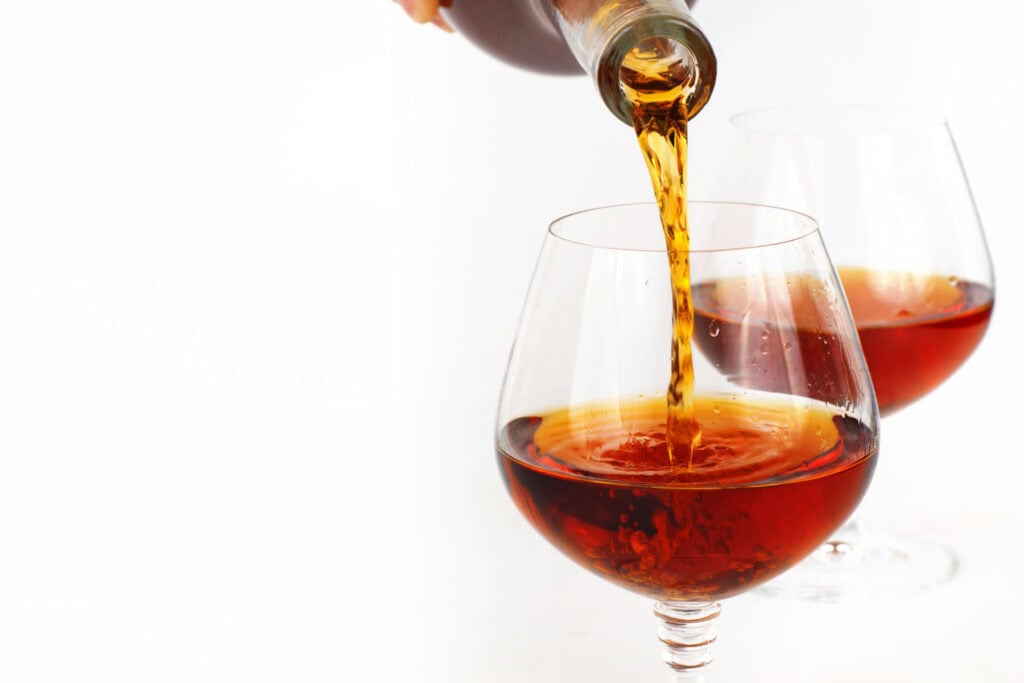
While Brandy can be mixed into cocktails, it is also delicious sipped on its own, and many people enjoy it this way. When you’re sipping it straight, the best way to do it is to follow a few simple steps:
- Pour the brandy into a brandy snifter *, which are round, sphere-like glasses with short stems. (More on these in a second!)
- Cradle the bowl of the snifter in your palm to let the heat of your hand gently warm the spirit. This opens up the aromas.
- Finally, give the brandy a sniff — called “nosing” it — just like you would wine.
- Take a small sip to let your palate adjust, then a bigger, fuller sip.
The traditional style of brandy snifter * is very round, globe-like, with a short stem. These are often called balloon snifters, but these days brandy enthusiasts consider them to be outdated. They prefer the smaller tulip-shaped glass because it concentrates the aromas better and doesn’t let too much alcohol overwhelm your olfactory senses.
favorite brandy snifters
 Buy Now →
  Buy Now →
  Buy Now →
 *

Cocktails with brandy
Brandy is delicious on its own, but it is fantastic in cocktails. Here are a few recipes you will see it in:
- Champagne cocktails: Because Champagne and Cognac both hail from France, it is not uncommon to pair them. The classic Champagne cocktail can feature brandy or gin. It works with other carbonated drinks too, like the French mule.
- French Quarter cocktails: You will especially see Cognac used in a lot of New Orleans drinks, like milk punch, the Vieux Carré, the Sazerac and the Sidecar, because of its French origins.
- In place of whiskey: Brandy often steps in for whiskey, giving a drink a lighter, fruitier flavor. Try it in a brandy Manhattan or a brandy old-fashioned.
- Dessert drinks: The French Connection, the Brandy Alexander, and the Stinger cocktail are all dessert drinks made with cognac. My tiramisu martini is another favorite.
- Punches and pitcher drinks: You will often find brandy used in sangria and punches. The fruity base of brandy makes it a natural fit for these party drinks.

Culinary uses
Just like you can cook with bourbon, you can make many recipes with brandy as well.
- Set it on fire: It is often used to flambé classic fruity desserts like crêpes suzette and cherries jubilee.
- Infuse it: It’s a wonderful infusion, too — it’s often used to soak the fruit and nuts in an old-fashioned fruitcake. You can also use it to make cocktail cherries at home.
- Bake with it: Bake it into an apricot brandy pound cake or classic brandy snaps. Or pour some sweet brandy sauce on top of whatever you’re serving.
- Try it savory: Brandy isn’t just for dessert. Try it in savory dishes like this stunning garlic brandy butter or even a steak with brandy sauce.
Brandy holidays
There are a number of brandy-related holidays throughout the year — as if you needed another reason to drink brandy!
- Jan 11: National Hot Toddy Day.
- Jan. 31: National Brandy Alexander Day
- Feb. 6: Pisco Sour Day
- June 4: National Cognac Day
- Sept 22: Wisconsin Brandy Old Fashioned Day
- Oct. 20: National Brandy Fruit Day
- Dec. 21: National Armagnac Day


Marshall Coombs says
Your article says whiskey is made from grapes..
“Brandy has a fruit base, whereas whiskey is made from grapes and aged rum is made from sugar cane.”.
and while taste is subjective, whiskey is generally not noted as being smokey.. that’s scotch, or Japanese whisky. But again, taste is subjective.
Good article though!
Susannah says
Ha, good catch on the grapes — that was a typo and I’ve since corrected it! As for smoky, I was speaking generally about whiskey as a category, but you’re right that it’s more pronounced in Scotch and some Japanese whisky. Thanks for the kind words!