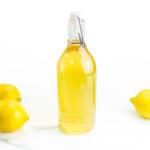
Homemade Limoncello
This homemade Italian limoncello uses lemons, high-proof alcohol and simple syrup to create a delicious after-dinner sipper and cocktail mixer. Multiply this recipe if needed.
Servings 24 ounces
Calories 78kcal
Ingredients
- zest of 3 lemons
- 2 cups vodka 100-proof or higher
- 1 cup granulated sugar
- 1 cup water
Instructions
- Zest lemons. Be sure to remove as little white pith as possible, as it adds a bitter flavor.
- Place lemon zest pieces in a jar. Cover with vodka and seal the lid tightly. Shake gently.
- Let rest for at least 3 days and up to 2 months. Shake gently every other day or so.
- The day of bottling, make simple syrup, warm the sugar and water over low heat and stir until the sugar has dissolved. Let cool completely. (Makes ~1¾ cups simple syrup.)
- Strain out the lemon zest. If you zested finely, double strain with a paper coffee filter or cheese cloth through a fine-mesh strainer.
- Add ½ cup simple syrup at a time to the limoncello, tasting after each until you reach your desired sweetness.
- Bottle in a mason jar or swing-top bottle. Store in the freezer.
Notes
Tips & tricks
When zesting the lemons, take as little of the white pith as possible, as it adds a bitter flavor.
Reserve the zested lemons for lemonade or other recipes.
The flavor should be perfect after 3 to 4 days, but you can also wait up to 2 months if you prefer a stronger lemon flavor. If you leave it too long, it can become bitter.
Best vodka for limoncello
Limoncello usually has a high alcohol content, so the best vodka for limoncello is a high-proof vodka. Use a flavorless, grain-based vodka, not a potato-based vodka.
Use the highest proof you can find. If you can find it, a 190-proof vodka like Everclear works well because it’s flavorless and won’t change the final product. (It’s not legal everywhere.) A 100-proof vodka, such as Absolut 100, Pinnacle 100 or Svedka 100, would work really well too.
Best lemons for limoncello
Italian limoncello is made with Femminello St. Teresa lemons, which is a varietal of lemons native to the Sorrento Peninsula of Italy. These varieties can be difficult to find outside of Italy, so standard lemons will work just fine. Non-organic lemons are typically covered in wax, so organic lemons are a better option. If you can find them, Meyer lemons are sweeter, smaller and rounder than regular lemons and have smooth, deep yellow skins. They are excellent for limoncello. You can also make other variations with lime, orange or grapefruit zest, or a combination.Nutrition
Serving: 1ounce | Calories: 78kcal | Carbohydrates: 9g | Sodium: 1mg | Sugar: 9g
